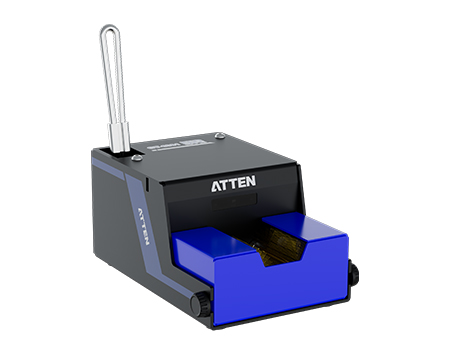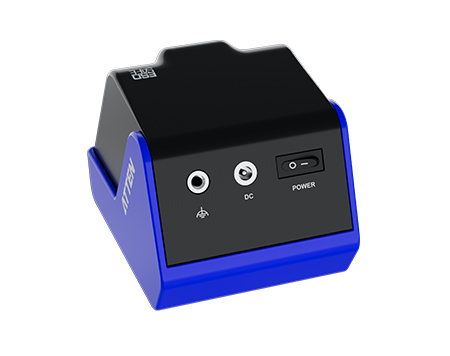
Introduction: K-type thermocouples turn a PCB preheater from a single-temperature platform into a multi-point temperature sensing setup, and the difference matters when a board has uneven thermal mass.
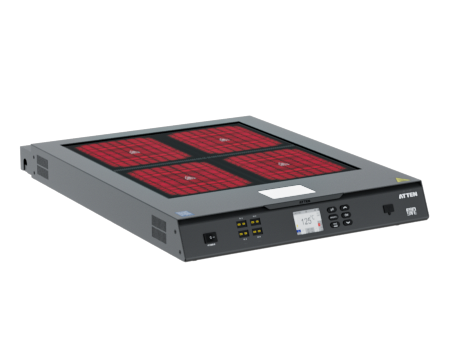
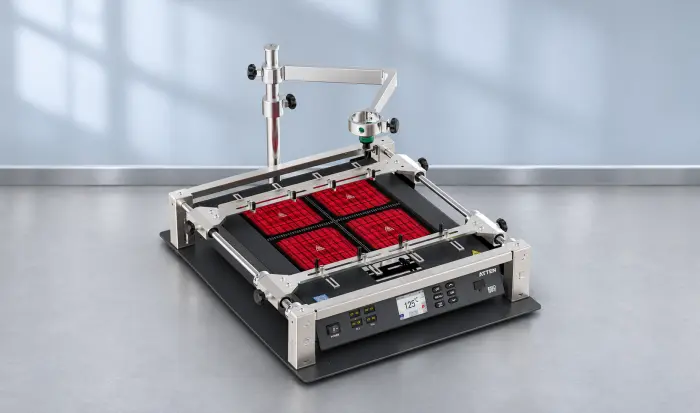
People comparing preheaters often focus on zone count first. Yet the sensor package tells you how the machine can observe the board. A platform with one probe gives one local reading; a platform supplied with several K-type sensors can show what is happening at multiple contact points. The ATTEN ST-7242 makes this easy to picture because its documented package includes four K-type thermocouple test sensors, and the platform has four switchable independent working zones. Understanding what each sensor does, and why four readings are more useful than one, helps a reader judge how multi-point monitoring fits real PCB preheating work.
A K-type thermocouple is a contact temperature sensor built from two dissimilar metal conductors joined at a sensing junction. When that junction sits against a surface, the temperature difference between the junction and the reference end produces a small voltage. The instrument converts that signal into a temperature reading using the known behavior of the K-type pair and standard thermocouple reference data. NIST's thermocouple reference tables are the standard background for interpreting those readings, while general temperature resources from Fluke explain why thermocouples are common in practical measurement work. On a PCB preheater, the "test sensor" is a probe that touches a chosen point: a board area, a copper plane, a heavy component pad, or a zone surface. It reports the temperature at that contact point, not an average for the whole board. That is exactly what a technician needs when checking how a board responds to bottom-side heat. The ATTEN ST-7242 from ATTEN Soldering Equipment documents four such sensors, which tells the reader that multi-point contact measurement is part of the platform's intended workflow.
Four readings are not just four copies of the same number. They become useful when the contact points are chosen to represent different parts of the heating job. On a four-zone preheater, the sensors can be placed to watch separate board areas, compare a board edge with a central copper plane, or check a heavy ground pad against a lighter signal area. Multi-channel thermocouple measurement resources from Analog Devices describe how separate sensor channels are read and conditioned so an instrument can compare several contact points. The value comes from the pattern across those points.
Each K-type sensor answers a local question: how hot is this spot? That local answer is affected by what the probe touches. A thermocouple pressed against a large copper plane may heat more slowly than one on a thin outer area. A probe near a heavy component footprint may show a different rise than one near the board edge. The sensor itself is simple, but placement is the real skill. Good placement puts the junction in direct contact with the area being judged, keeps the lead clear of hot surfaces, and uses the same contact method each time so readings can be compared.
A single reading tells you that one point has reached a certain temperature. It cannot show whether the board is heating evenly across a wide area. Four contact points begin to show the shape of the heat pattern: which zone is ahead, which board area is lagging, and where a heavy copper region is holding heat differently. That information helps a technician decide whether to use independent zone operation, combine zones, or adjust the board position. A four-point set is a sample rather than a full thermal map, yet it gives a much clearer picture than a single probe.
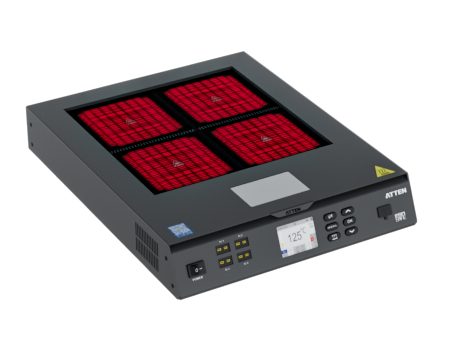
When reading a preheater configuration, the sensor count is the first clue. Four K-type thermocouples bundled with the machine show that the platform is designed for multi-point contact measurement, not only a single spot check. The zone layout is the second clue. Four switchable independent working zones with independent and combined operation mean the heating area can be shaped to the board. A preheater manufacturer that supplies four sensors and four zones is offering a system where sensor placement and zone choice work together. Package contents also matter. The documented ST-7242 package includes the main unit, four K-type thermocouple test sensors, a grounding wire, a certificate, a user manual, and a power cord. The grounding wire belongs to the wider electrical safety picture, while the sensors belong to the temperature-reading picture. Keeping those roles separate helps a reader understand what is included and what each item is for. A preheater supplier may describe many features, but the sensor count, zone count, and package list are the concrete details that show how the platform is set up for monitoring. For exact sensor accuracy, temperature limits, and connection details, the user manual or supplier documentation is the place to check. Those details matter when a task needs a specific measurement confidence, but the core idea is already clear from the configuration: four contact points, four zones, and a platform built for board-level temperature observation. The documented ATTEN ST-7242 package is a useful reference point for comparing sensor count, zone layout, and included accessories.
Multi-point PCB preheat monitoring is easier to understand when the thermocouple is treated as a contact sensor with a specific job. It measures the temperature at its junction, and four sensors let a technician compare four chosen points. That is a different kind of information from one number: it shows spread, lag, and the relationship between board areas and heating zones. The ATTEN ST-7242 configuration—four K-type thermocouple test sensors plus four switchable independent working zones—makes that concept concrete. The practical lesson is to choose contact points with purpose, then read the pattern rather than a single value. For exact specifications, the manual and supplier documentation remain the reference.
A: It measures the temperature at the point where its sensing junction touches the board, a copper area, a component pad, or another chosen contact surface. On a preheating platform, that local reading helps a technician judge how a specific spot responds to bottom-side heat. A K-type sensor is a contact probe, so its reading describes the contact point rather than the whole board.
A: Four thermocouples let the user watch four contact points at once. That is useful when a board has uneven thermal mass, when several heating zones are active, or when the technician wants to compare a board edge with a central copper plane. One probe gives a local reading; four probes reveal differences between locations, which is the point of multi-point monitoring.
A: A single reading answers "how hot is this one spot?" Multi-point monitoring answers "how do these spots compare?" The second view can show which area is heating faster, which zone is lagging, and where a heavy copper region is holding heat differently. It is still a sample of selected points, but it gives a more useful picture of the board's heat pattern than one number alone.
NIST Standard Reference Database (SRD) 60
Temperature & Thermometer Resources & Solutions
Two Ways to Measure Temperature Using Thermocouples
ATTEN ST-7242 Four-Zone Preheater

Copyright © 2025 SHENZHEN ATTEN TECHNOLOGY CO., LTD All Reserved.